Uncovering Hidden Histories that Have Been Buried Far Too Long by Randall Mullins

"The way to right wrongs is to turn the light of truth upon them."
–Ida B. Wells

Too often, discussions about race either stay at surface-level or happen only among audiences steeped in knowledge about sociology, history, systemic racism and privilege. The goal of the Race Cards is to facilitate honest, authentic discussion around race in a way that is accessible to everyone.

Dr. Shytierra Gaston, a criminal justice professor at Northeastern University in Boston, MA, is currently recruiting and interviewing families/descendants of victims of fatal racial violence (including racial lynchings) that occurred in the U.S. anytime after 1865. The purpose of the study is to document the intergenerational harms of racial violence, give voice to families, and illuminate the role of the government (e.g., the police) in racial violence and oppression.
Please see flyer below for details about the interviews.

by Matthew Peddie (WMFE)
A group of activists and historians has been working to recognize the victims of the Ocoee massacre on election day in 1920.

GETTING COMFORTABLE WITH BEING UNCOMFORTABLE
A Sermon on Luke 6:27-36
Sometimes, you just have to tear up your sermon and start all over again. That's what Traci Blackmon, a black United Church of Christ pastor said to Mike Kinman, a white Episcopal priest, the day after Michael Brown was shot and died in Ferguson, Missouri - August 9, 2014.

An oft-asked question during February, what is the purpose of a Black History Month?


Since early 2016 I have attempted to encourage a spirit of leadership in the Lynching Sites Project modeled after high-flying geese, but I have never taken the time to spell that out fully. I want to do that here with some examples from the LSP story.
There are 6 character traits of high-flying geese which offer profound teaching about leadership, communion with one another, and flying well as an organization:
1. Keeping Company with the Fallen
by David Waters, Commercial Appeal
When the Rev. Fred Morton began his ministry in Whitehaven, in the midst of the racial tensions of early 1968, he thought he was ready for the challenge.
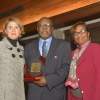
The Lynching Sites Project of Memphis received the Zion Preservation Award from the Zion Community Project at its Tenth Annual Fundraising Benefit on November 1 st at Rhodes College. The Zion Project manages the conservation of the historic Zion Cemetery, burial grounds for over 30,000 African-Americans. The organization noted LSP’s commitment to recognize victims of racial terror and its strong desire for community inclusion. Board President Laura Gettys, along with Project Leader Leonard Blakely, who substituted for VP Iris Love-Scott accepted the honor on behalf of LSP.
Text by Sherrilyn Ifill | Photographs by Johnathon Kelso
August 28, 2018
GROWING DOWN INTO THE GOODNESS OF OUR GRIEF
Grief in the Life of the Lynching Sites Project
by Randall Mullins

One hundred and twenty five years ago, on the night of July 22, 1893, law and order broke down in Memphis. A mob of several thousand attacked the jail; meeting almost no resistance from officers, they seized Lee Walker, a young African American man. The mob dragged Walker from his cell, beating him, stabbing him, and stripping him of his clothing. They took Walker north on Front Street to an alley between Sycamore and Mill Streets, where they hanged him from a telegraph pole. Once Walker was dead, many spectators left, but some mob members cut the body down, burned it, and mutilated it