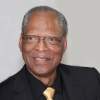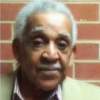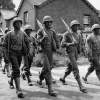
After four decades in the Army and the airline industry, John Ashworth is taking on a new challenge. Reclaiming history.
The Past for the Future, by Joshua Cannon
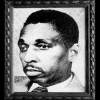
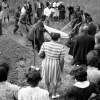
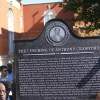
African-American historian John Ashworth will lead a citywide interfaith prayer service May 21st at the site where Persons was murdered, nearly 100 years to the date it occurred. Newspapers in 1917 created a spectacle of Persons' death for days leading to it, gathering thousands of people to what is now Summer and the Wolf River. After he was set afire, Persons was decapitated and taken to Beale Street, and his head was hurled at a group of black pedestrians.
Bryan Stevenson of EJI interviewed by The Intercept
Another great interview with Bryan Stevenson (excerpt): "Part of our work is aimed at trying to re-engage this country with an awareness and understanding of how our history of racial inequality continues to haunt us. I don’t think we’re free in America — I think we’re all burdened by this history of racial injustice, which has created a narrative of racial difference, which has infected us, corrupted us, and allowed us to see the world through this lens. So it becomes necessary to talk about that history if we want to get free."
Obama Signs Emmett Till Bill To Reopen Unsolved Civil Rights Cases
The law calls for “the full accounting of all victims whose deaths or disappearances were the result of racially-motivated crimes” and for authorities to hold criminals accountable.
Christmas 1951: Murder of a civil rights pioneer (Harry T. Moore)
A early leader in the civil rights movement in Florida and the first NAACP official killed in the struggle for civil rights died on Dec. 25, 1951, when a bomb exploded under the floorboards of his bedroom. The murder, done by members of the Ku Klux Klan in retaliation for calls for action against a Southern white sheriff, was never officially solved.
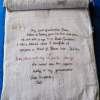
A slave mother's love in 56 carefully stitched words
Auslander believes this bag is a national treasure. He says we often think of slavery in the terms of suffering but, “we have to remember the narratives of resilience, of courage and of family continuity. You can't imagine a family being more terribly torn apart than by then by a slave auction of a 9-year-old little girl, but this family story continued.”
What the lynching memorial will force us all to face
“The story of the Negro in America is the story of America,” Jackson says, employing the eloquent words of Baldwin. “It’s not a pretty story.” But it is a troubling and complex one we all must know and do a better job of understanding. Like the brand-new National Museum for African American History and Culture here in Washington, the Memorial to Peace and Justice in Alabama will make that task a little easier.
Bryan Stevenson of EJI on PBS Newshour last night
Bryan Stevenson was interviewed for 5 minutes or more on PBS Newshour last night:
Life stories are important. History matters. Memory is sacred – Join our work.
Dear Friends, our life stories are important. History matters. Many would say memory is sacred and that real human community is not possible without it. We belong to one another as human beings through the common stories of our families, our nation and our local community.
Volunteer Opportunities
Especially as we plan toward events from February through June 2017 we have many needs for volunteers in addition to the faithful force which is already at work. We need people who care about our mission in such areas as overall planning and coordination, writing, social media, publicity, research, supporting local high school students, engaging artists and musicians in the Project, engaging area religious leaders in the work, and fund-raising.
America's Original Sin
We recommend America's Original Sin by Jim Wallis and its study guide as important resources, especially for group study and discussion groups. Jim Wallis has been respected as a religious leader across the nation since the 1960s. He identifies as a white evangelical Christian but he has won the respect of Roman Catholics and Liberal Protestants as well as leaders from the Islamic and Jewish communities. Published in 2016 the book includes updated reflections on events in Ferguson, Missouri and Charleston, South Carolina.
Lynching in America: Targeting Black Veterans
The end of the Civil War marked a new era of racial terror and violence directed at black people in the United States that has not been adequately acknowledged or addressed in this country. Following emancipation in 1865, thousands of freed black men, women, and children were killed by white mobs, former slave owners, and members of the Confederacy who were unwilling to accept the anticipated end of slavery and racial subordination.